Saturday, June 7, 2014

Breezed out of town, leaving Washington ... right before Memorial Day (143Cong.Rec.S5220)

I guess we've fully incorporated ourselves back into U.S. culture because for Memorial Day weekend, we did what apparently every other American did: We got out of town. In hopes of avoiding traffic, we waited until Saturday morning to take off. Even though we didn't book a campsite, we weren't worried about our delayed start because we figured something was bound to be open in one of the campgrounds within George Washington National Forest. After all, about a month ago, we had few neighbors in a free campground in West Virginia. 

To make a long story short, we were wrong. North River Campground in the Todd Lake Recreation Area was overrun for a mountain-biking event, and Brandywine Recreation Area was booked, probably because of its tempting lake beach on a warm and sunny weekend. We didn't find a spot until our third try, albeit surprisingly at another free campground (I guess people think you get what you pay for). Camp Run Campground was remote and primitive, but it was a perfectly suitable jumping-off point for touring the Virginia-West Virginia border area.

With our mislaid confidence, we took a leisurely route to the campground. We got Sage out of the car for a short walk in front of Edgar Allan Poe's dorm room at the University of Virginia in Charlottesville (left). I had a few more lingering worries about having to sleep in a Walmart parking lot than TJ, so I pushed us forward pretty promptly. (Luckily, on our way back to the DC area on Monday, we were able to actually linger in the college town of Harrisonburg, where we joined summer-session students from James Madison University for breakfast at The Artful Dodger.) We managed to pitch our tent and cook a campfire dinner before dark Saturday night, so I was relieved and rested when we started our explorations on Sunday. We enjoyed the nice weather with a stroll beside Jackson River in Hidden Valley Recreation Area in Monongahela National Forest (right).
Hidden Valley is just west of Hot Springs, which is home to The Homestead, a resort I could probably never afford (nor want to). But I would be willing to shell out the cash for Jefferson Pools, named after the third U.S. president, who visited the 18th-century springs during a three-week stay in Warm Springs in 1818 (left). Unfortunately, I didn't bring a bathing suit, and although you can take a dip in your birthday suit, it was a little too hot to leave Sage in the car while we soaked. Unique octagonal structures still cover the natural sulfur springs, which were originally discovered in the 1600s before becoming a spa destination (right).
On our loop back to our campground, we headed to Cass Scenic Railroad State Park, where you can ride on steam locomotives once used to transport lumber to the mill in Cass. We were too late to take a train trip, but we stopped in the old company store and cruised by the company houses, which can be rented for vacations. Many cyclists take advantage of the cottages at the beginning or end (or both) of a trip on the 78-mile Greenbrier River Trail.
After breakfast in Harrisonburg on Monday, we took the long route home through Skyline Drive in Shenandoah National Park. We only drove a fraction of the road, but there are so many roadside scenic overlooks that even our 30-mile portion (from Swift Run Gap to Thornton Gap) took a good couple of hours (left). Plus, I had to spend some extra time tempting TJ to come back to the car and not head off into the great beyond on the Appalachian National Scenic Trail (right).
Unlike our campsite hunt on Saturday, we had some good luck on Monday because we managed to see Massanutten Lodge, which is open only a couple of hours a day on the weekends. The mountainside vacation home was built on land purchased in 1910 by Addie Nairn Hunter, who then a year later married the seller, George Pollock, owner and operator the adjacent Skyland resort. Pollock nee Hunter was an environmentalist of her day, once buying 100 hemlocks to prevent them from being logged, and remained an advocate throughout her life; she helped lobby for the area to become a national park.

Wednesday, May 7, 2014

West Virginia’s mountain region is the last best place in the mid-Atlantic (Serial No. 110-59)

One Stateside habit we were happy to get back into was camping. So we decided to spin through the state and national forests of West Virginia on our way to our place in Virginia. But because the winter had been so untrustworthy with its high precipitation and low temperatures -- and because my blood had become so thin from half a year of 100-plus sunny and humid days -- we weren't ready to pitch tents (which were in transit or in storage, anyway).

So we settled for and into a "modern" cabin at Lost River State Park (left). "Modern" apparently means central heating, which I didn't mind, considering the misty cold that rolled in the same time as I did. Sage didn't seem to mind either. We went for a chilly hike, but afterward, he appeared more than content to keep watch through the window from the comfort of the couch (right). 
The area, in the eastern handle of the state, was designated as a park because of Lee Sulphur Springs, which smell exactly like what you would expect (left). Despite the odor, people used to flood into the area to soak in the springs at Howard's Lick retreat, which was owned by the family of Gen. "Light Horse" Harry Lee, father of Gen. Robert E. Lee (right).
TJ and I decided to bask in nature instead. As John Denver sang, West Virginia's "mountains, growin' as the breeze" are "almost heaven," as we saw while riding down some of its "country roads" (left). For the most part, we traveled along the Potomac River branches more than the Shenandoah River, but even the roadside "cricks" were spectacular (right).
With such pleasant weather, we got out of the car and onto our own two feet. Obviously, we hit up the trails at the state park (left). We also strolled along the Chesapeake & Ohio (C&O) Canal to see the Paw Paw Tunnel, a 3,118-foot segment along the towpath (right). I don't really like dark and damp places (and neither does Sage), so I was happy to double-back to the car. 
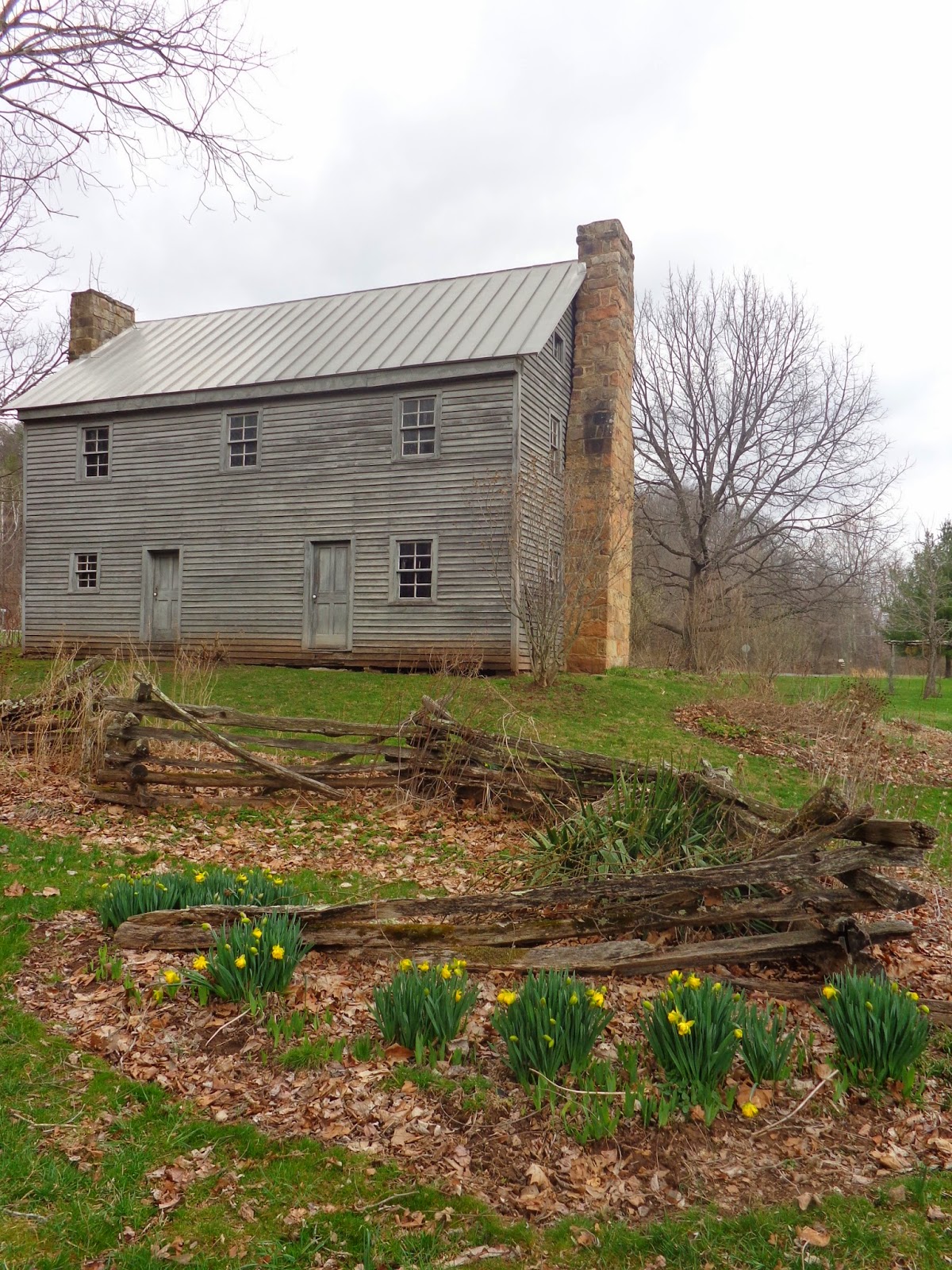
Another place where we turned around early was at Seneca Rocks. There is a trail to an overlook all the way at the top, but we only hiked about a mile in to some stairs, at which point I claimed the dog couldn't make it any farther. In actuality, I was happy to view the astounding quarzite crags from the North Fork River valley (left), from the daffodil-filled grounds of the former Sites Homestead (right).
In our wandering back to our cabin, we passed through Oldtown, Maryland, a former Shawnee village that was founded as a trading post by Thomas Cresap, infamous for evicting settlers under the auspices of Lord Baltimore. A famous landmark south of Oldtown is the Historic Toll Bridge crossing the North Branch Potomac River into West Virginia (left). The toll taker was a little worried that the driver wouldn't be able to steer his cotton-candy camper across the bridge, but luckily, he made it (right).
There are definitely characters to be found in West Virginia. We met a very welcoming crew of them at Steve's Broken Spoke near Baker, where we stopped looking for some dinner. We left with a dozen wings and a half-pound of steamed shrimp -- after witnessing a great deal of good-natured, sarcasm-laced sniping. For another meal, down the highway corridor in Moorefield, we had French-dip brisket and pulled-pork sandwiches at Blues Smoke Pit (left). Perhaps our coziest dinner was a humble affair of meat, cheese, bread, and wine next to our cabin's fireplace (right).
We were in West Virginia during the week, so we didn't get to try out Lost River Brewing Company, which is open only on weekends. But we made up for that oversight when we headed back to the area for a Saturday-night camping trip. We set up our tent -- for free! -- at the Hawk Recreation Area campground (left). Then we headed into Wardensville to sample the brewing company's pale, amber, and black ales along with some lumpy crabcakes and glazed duck breast. The next morning, we drank in the view of late buds along the trails within George Washington National Forest (right). It was equally delicious.

Wednesday, April 16, 2014

We engage in a process of enculturation (S.Hrg.105-20)

Department of State employees in between overseas assignments benefit from mandatory home leave, in order to "undergo re-orientation and re-exposure in the United States." The prefix re would indicate that this time would be spent doing things you've already done before. Well, not afraid to stick it to the man, TJ and I used most of our home leave to try new things instead.

After getting our fill of 'Merica with visits to Walmart and Big Lots, we took our consumer ways to Ohio's Amish Country. We started by attending the Kidron Livestock Auction to scope out some potential pigs for a friend (below). Despite their cuteness, we managed not to pick up any porkers for ourselves. We did pick up some things from the outlet section of Lehman's, which is a hardware-store day-trip destination. Indeed, we re-exposed ourselves to livestock and lumber shopping as a traditional family outing.
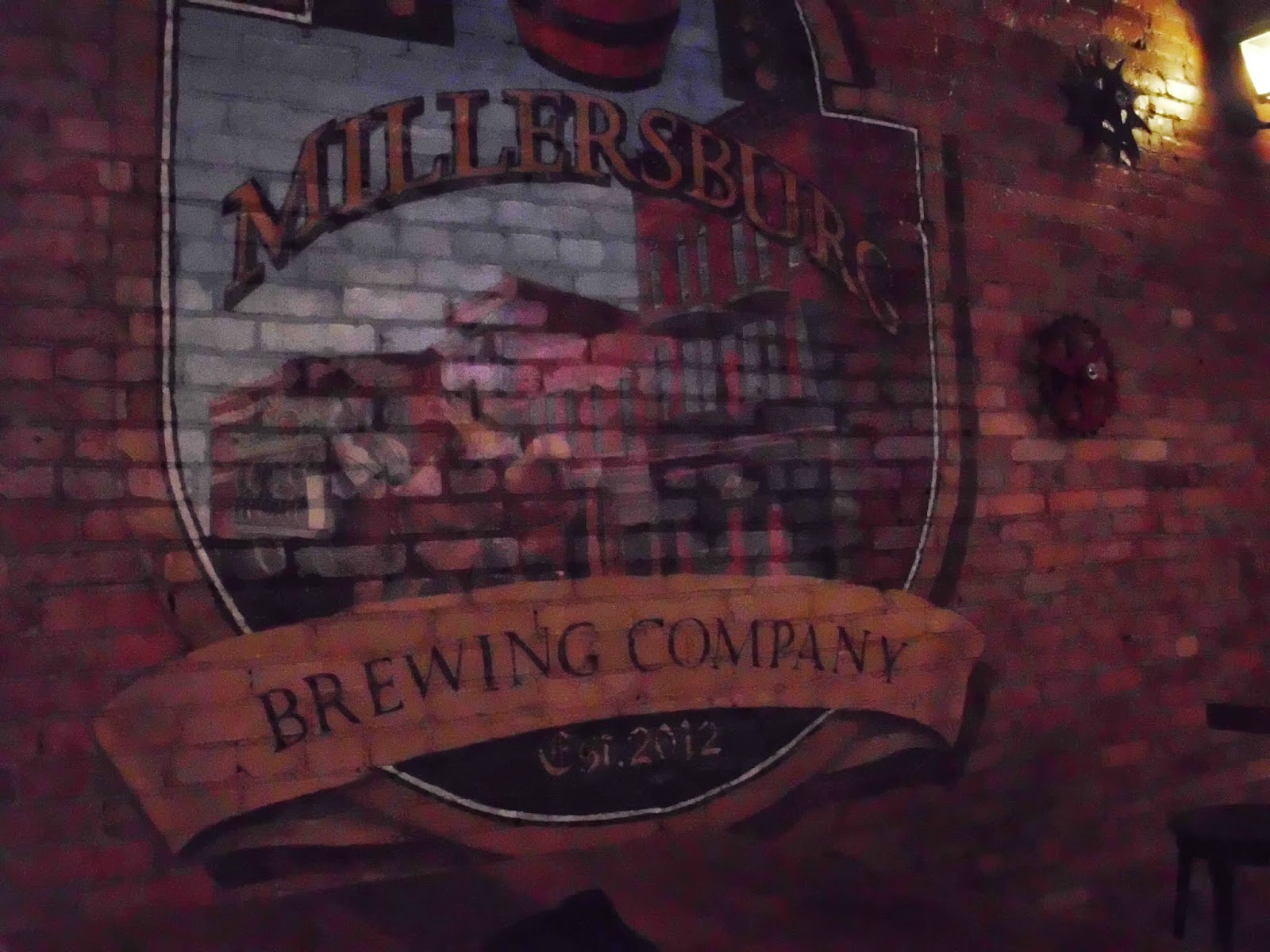
On our loop back to suburbia, we swung through Millersburg, one of the bigger commercial centers in Amish Country. It is also home, perhaps unexpectedly, to a high-quality microbrewery: Millersburg Brewing Company (left). We had a flight of four tastes in the brewery's tap room (right) before heading next door to Bags Sports Pub, which had its Lot 21 Blonde on tap. This partnership was interesting considering the proximity -- but also because the sports-bar owner is the son of Amish parents. The owner has obviously maintained a connection with the community because there is a special room in the back for the Amish to be separate from the happy-hour heathens, and it was packed.
We had some deliciously greasy all-American burgers at Bags. And we continued to re-orient ourselves to U.S. cuisine during outings that included drinking in public, something we hadn't done in a while. Nobody seemed to gawk when I sipped a glass of La Crescent at Maize Valley Winery in Hartville (left). And of course, we had to wash down our hearty Polish fare (chicken paprikash for me and pork with pierogis for TJ) with mugs of beer at Sokolowskis University Inn in Tremont (right).
Pork played a big role in many of our activities, including one that had been hanging out and waiting for us -- literally -- the whole time we were in ham-free Pakistan. TJ had tried his hand at home curing, and we armed ourselves with hand tools, a hacksaw, to see the fruits of his -- and his family's -- labor (left). The inside marbling looked lovely (right), but the outside moldiness looked suspect, so TJ had some hunks of meat tested. Although no botulism was detected, high bacteria levels indicated a possibility of contamination. So now, unfortunately, we are the proud owners of a pig-leg doorstop. (Personally, I would've preferred a cute little piggy.)
Of course, I also had to re-acquaint myself with my hometown, where there are still plenty of unexplored corners to visit. I played tourist by finally seeing Mansfield's most famous point of interest, the Ohio State Reformatory. TJ and I took advantage of a discounted self-tour during a home show on its grounds and in its warden's quarters. The grounds, quarters, and cellblocks have been filmed in scenes for such American classics as Air Force One, Tango & Cash, and Lil' Wayne music videos (left). Oh, it's also one of the main stops on the Shawshank Trail, a driving tour of 14 filming locations for The Shawshank Redemption. The institution has been featured in many TV shows about the supernatural (Ghost Hunters, Ghost Adventures, etc.) and offers occasional ghost hunts. I didn't see any ghosts during our visit, but still, I found the old toilets plenty scary (right).
Some people consider Downtown Mansfield pretty scary, too. But I was happy to see it coming into its own. In our continuing celebration of the States' culinary ethnic diversity, we ate a Hungarian hot pepper salad at Uncle John's Place on the square (left). While we dined, the flakes started falling (right), so we ducked into Relax It's Just Coffee in the Carrousel District for an after-meal drink. We would've preferred to warm up with a drink from the new Phoenix Brewing Company around the corner, but it hadn't quite opened for business yet. Like with everything else, I blame the long winter for the delay.
By the time we got to the DC area, where we will be for a while for training, winter seemed to be gone. If the pink buds weren't proof enough (left), then the huge crowds at the National Cherry Blossom Festival definitely were. In case you can't tell, there are lots of blooming branches behind those teeming throngs (right). Despite the years we've lived in the area on and off, this was the first time I braved the crowds to see the trees, and it was worth it. 
To be honest, the blossoms were just a small side trip on our way to a different festival. Surprisingly, the crowds at the DC Beer Festival at Nationals Park were thinner than those in the Tidal Basin (left). I would've thought that unlimited tastes of beer would've been a bigger draw. After even small mugs of beer (right), it was nice to be able to take the Metro and bus home. One aspect of U.S. culture that I was reminded of too late is the lack of public toilets within public transportation. Sadly, I forgot that begging to use the bathroom can be a first-world phenomenon.

Friday, March 14, 2014

My advice to my peers is to follow your dream (155CongRecE1893)

Most of you know me as a cynical person, which I absolutely am. But most of you might be surprised to know that I don't think of myself as pessimistic. These two attitudes are not incompatible. The origin of the philosophy of Cynicism comes from a Greek sect that believed good is obtained by reason, self-sufficiency, and self-control. Of course, Cynics didn't believe most people exhibited these traits and instead were selfish and dishonest, so they thought pretty negatively of humans on the whole. I tend to concur.

Somehow, though, the modern version of cynicism -- small c -- extends this negativity toward events and outcomes, not just people, so it gets linked to pessimism. And here is why I am a cynic but not a pessimist: I believe that good things will happen if people do good things. But this doesn't mean that I am an optimist. I do not believe that good things will happen just because you really, really, really want them to.

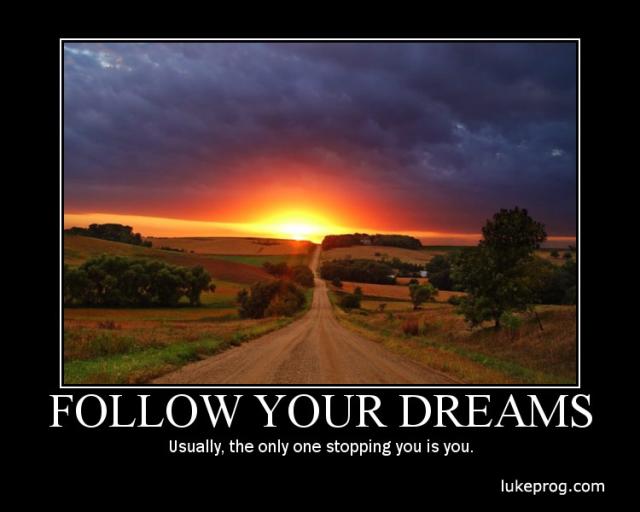
And this is why I really, really, really hate those inspirational sayings that get passed around the internet. They typically promote good results without any expressed good action. The slogan that most gets my goat is "Follow your dream." It's a nice sentiment about something good happening, but it doesn't give you any indication of what good actions you can, should, or must do to achieve it. From this poster, I can only deduce that it has something to do with staring up at clouds and screwing around with fonts.

Of course, that hasn't stopped the phrase from becoming a cliché, the kind we cynics tend to hate, as it reveals the superficiality of humans. Here are just a few ways this unique idea has been spread throughout the world:
  • In song by young American artist Cymphonique, little sister of Lil' Romeo, and by Filipina Sheryn Regis, a first runner-up in the Voice of Asia competition (which was then covered by young Filipina upstart Maria Aragon)
  • In art through an ink print by Anna Nielsen
  • In literature with the memoir of Irish singer Daniel O'Donnell
  • In humanitarian work through foundations based in the United States and Britain
  • In social causes promoted by a dog shelter for border collies and shelties in Pennsylvania
  • In government programs such as a statewide "aspirational strategy" in Western Australia
  • In charitable missions like the "President's Theme" of the Lions Club for 2013-14 
  • In private initiatives including BBC's job-search-help website
Don't even get cynic me started on a related online game for girls, a "job search" that involves an "assistant" finding things for her boss in a messy room -- as if that is every little girl's dream. But the slogan is so popular, it must be working for someone, right? Unequivocally wrong. And now, let me explain to you why this saying is rubbish semantically, grammatically, and logistically.

First up is the last word "dream." It doesn't measure up, no matter how you semantically slice it. Although I might like to follow the REM kind -- those involving lost loved ones come to mind -- I have yet to master the art of not waking up. As far as I know, modern science has not yet managed to come up with a cost-efficient way for me to eternally slumber with Benedict Cumberbatch -- in my dreams, of course.

Okay, I know in this slogan, "dream" refers to the wakeful kind, a sort of passion or goal. But here's the problem with that meaning: Not everyone knows what he or she wants to be when he or she grows up. Frankly, I still don't. And even if they do, those goals often are not realistic. If so, I would be well on my way to becoming an astronaut-veterinarian right now. Other passions are not possible because they don't provide enough for your biological needs to stay alive. This girl's dream of being a barefoot balloon sprinter is nice, but it's sure not going to pay the bills. 
Follow Your Dream
On to the second word, "your," whose grammatical ambiguity gives people false hope. This possessive pronoun can be either singular or plural, based on context. It's misleading to let a person think that his or her dream is his or hers alone, that there is no competition for a certain achievement. In fact, many other people often stand in the way of one's dream. Just ask any Cumberbabe.

So the use of the phrase in this poster is particularly silly, especially if you know the origin of "Keep Calm" propaganda. I'm pretty sure Britain thought the Nazis were some serious competition; after all, it nearly invaded Germany. (Admit it, the drive to stop Hitler makes your dream feel pretty lame, doesn't it?)
The presence of competition is especially true because many people dream of becoming the "best" at something. This superlative implies that there are at least two other people in the world with the same dream -- and therefore you must defeat them. If you want to be the best barefoot balloon sprinter in the world, you're going to have to beat little miss Tralala up there. Is crushing other people's dreams part of your dream? Shame on you.

And finally, let's get to that imperative verb "follow." It sounds so simple, like follow the directions. Except the logistics of most dreams are like putting together a nuclear reactor from IKEA with the instructions written in Chinese and tools made from putty. Surely we all know that it's not always easy to construct your goals. Yet "follow" omits any implication of sacrifice and compromise, those pesky literal and figurative costs. Instead, the path to your dream is just a walk in the park -- or a stroll on a country road, if you examine this picture. When really, what is right over the rise might be just a lovely sunset -- or a nuclear explosion. 

And even if the directions aren't difficult, they aren't always straightforward. "Follow" sounds so easy, like follow the leader. But if you do that, you're following someone else's dreams, aren't you? And I'm pretty sure that's not what the slogan is meant to inspire you to do. You could find a mentor to guide you, I suppose, like Alice following the rabbit down the hole. But everybody knows that damn bunny doesn't know where to go. If it were that simple, we wouldn't need an inspirational poster, now would we? Simply put, not every dream comes with a clear path. For example, how exactly does one become a professional critic of inspirational messages?

Thursday, February 27, 2014

The imposition of a complete ban on alcohol (Joint Committee Print 108-59)

In case you didn't already know, Islamic law prohibits the sale and purchase of alcohol among Muslims in Pakistan. If you are a non-Muslim, you can obtain a card that allows you purchase alcohol, but still, it's pretty hard to find a place with a non-Muslim to buy it from.

Like many missions, the U.S. Embassy in Islamabad has a commissary, which has permission to import alcohol into the country. So diplomatic employees of the embassy can buy alcohol there pretty much any day of the week -- unless there are shortages, sometimes because of bureacratic hold-ups. At separate times during our year here, the commissary has been devoid of all beer and all red wine.

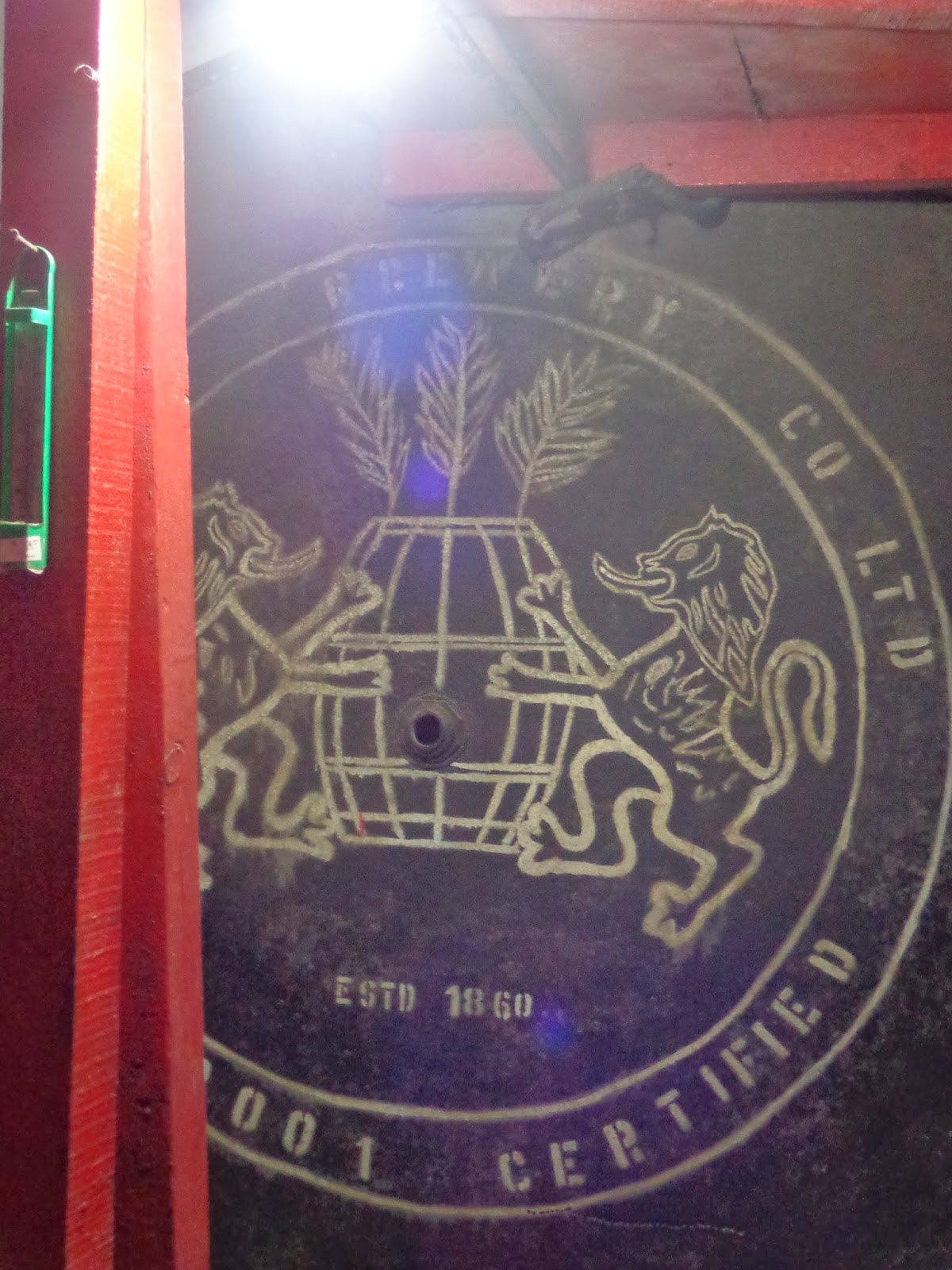
So it's pretty strange to consider that Murree Brewery, the only brewery in Pakistan, exists. On a recent weekend, we headed to its factory in Rawalpindi for a tour and tasting (left). The brewery used to be based in the mountain town of Murree, thus the name, because of the quality of water available there, but logistical costs drove it to move down to the valley into the Islamabad suburb. As its logo indicates (right), the brewery was established in 1860 during colonization by the British, who are known to enjoy a stout now and again.
So the brewery is more than 150 years old, and its facilities are not so young either. Taking a tour through the facility was like taking a step back in time. The drying ovens date to 1944, according to a placard (top left). The brew pots are manned by workers who stir the boil with wooden poles when necessary (top right). Normally, the factory is powered by electricity and gas, but load-shedding and petrol shortages mean workers sometimes, including the day we visited, have to run the plant with energy from a large wood-burning stove (bottom).
Even the barley is done up old school. The seeds arrive in plastic-woven -- finally, some signs of modernity -- bags (left), then they are spread along the length of entire floor of the factory to germinate slightly and naturally before the barley is incorporated into the mash (right).
In the bottling section of the brewery, there are more machines, but the big lights and many switches make them seem like they are straight out of a Cold War-era Mission Control (left). And quality control consists not of a computer, but a guy who pulls bottles off the line if they contain any impurities or don't contain enough liquid (right).
On this day, as you can see, the factory wasn't bottling beer but liquor. The brewery is known for its whisky (another British favorite, coincidentally), which is aged in a huge warehouse of casks (left). Apparently keeping the casks cool enough, especially during the country's hot and humid summer, is quite a task. But over the years, Murree has offered a selection of liquors, including a "lemon lime" gin and a vodka with a label remarkably similar to the old version of Smirnoff.
At first, I was a little shocked at all the cans stacked up outside (left), thinking they were full of beer that would become skunked, but they turned out to be empty. The full cans and bottles were loaded on Pakistan's famous jingle trucks (right), to be distributed to limited outlets throughout the country. Each province or terrority is in charge of granting permits for alcohol sales. In Islamabad, part of the Capital Territory, foreigners can purchase Murree products through a hotel. When we first arrived, Murree beer was available in the commissary, but when the outlet was forced to contract with a single distributor, it opted for one with international brands.
So it had been a long time since we had actually tasted Murree beer. The tasting started prior to the tour, perhaps to dull the shock of the outdated equipment. We were allowed to serve ourselves from a selection of the best beers in Pakistan: Special Strong Brew, Millennium Brew, Classic Lager, and Murree Beer (top). After the tour, we were treated to draft beer, served from a large beaker, perhaps the most scientific instrument in the place (bottom left). The brewery owners graciously provided us with snacks to sustain us, and much to my surprise, right as we were leaving, we were given a set of four mugs, replicas of the ones we had been using (and I had been coveting) during the tasting (bottom right).
 
Sadly, I did not manage to get a bottle opener, but I did sneak out a cardboard coaster with the slogan "Have a Curry with Your Murree!"