Wednesday, April 16, 2014

We engage in a process of enculturation (S.Hrg.105-20)

Department of State employees in between overseas assignments benefit from mandatory home leave, in order to "undergo re-orientation and re-exposure in the United States." The prefix re would indicate that this time would be spent doing things you've already done before. Well, not afraid to stick it to the man, TJ and I used most of our home leave to try new things instead.

After getting our fill of 'Merica with visits to Walmart and Big Lots, we took our consumer ways to Ohio's Amish Country. We started by attending the Kidron Livestock Auction to scope out some potential pigs for a friend (below). Despite their cuteness, we managed not to pick up any porkers for ourselves. We did pick up some things from the outlet section of Lehman's, which is a hardware-store day-trip destination. Indeed, we re-exposed ourselves to livestock and lumber shopping as a traditional family outing.
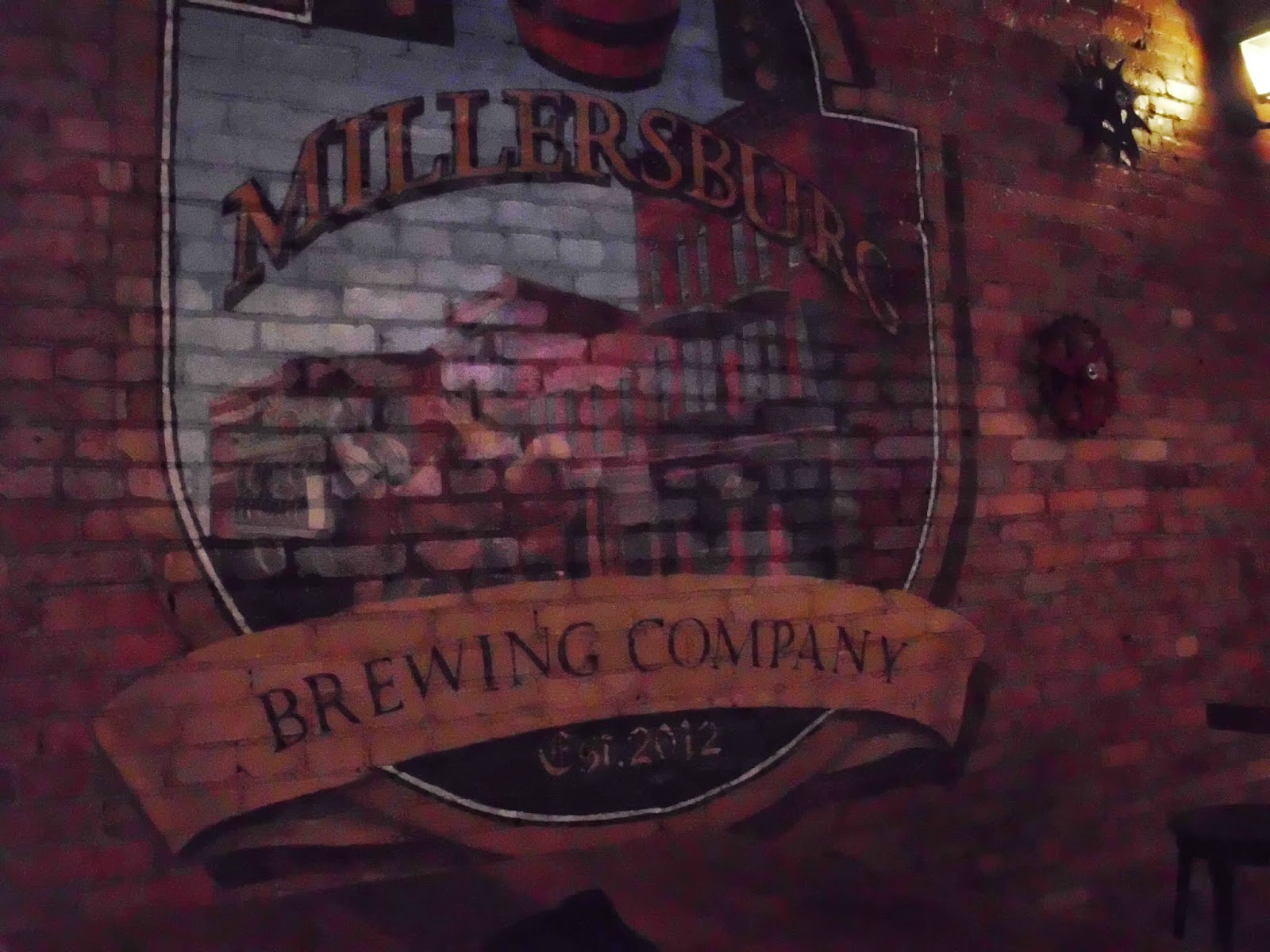
On our loop back to suburbia, we swung through Millersburg, one of the bigger commercial centers in Amish Country. It is also home, perhaps unexpectedly, to a high-quality microbrewery: Millersburg Brewing Company (left). We had a flight of four tastes in the brewery's tap room (right) before heading next door to Bags Sports Pub, which had its Lot 21 Blonde on tap. This partnership was interesting considering the proximity -- but also because the sports-bar owner is the son of Amish parents. The owner has obviously maintained a connection with the community because there is a special room in the back for the Amish to be separate from the happy-hour heathens, and it was packed.
We had some deliciously greasy all-American burgers at Bags. And we continued to re-orient ourselves to U.S. cuisine during outings that included drinking in public, something we hadn't done in a while. Nobody seemed to gawk when I sipped a glass of La Crescent at Maize Valley Winery in Hartville (left). And of course, we had to wash down our hearty Polish fare (chicken paprikash for me and pork with pierogis for TJ) with mugs of beer at Sokolowskis University Inn in Tremont (right).
Pork played a big role in many of our activities, including one that had been hanging out and waiting for us -- literally -- the whole time we were in ham-free Pakistan. TJ had tried his hand at home curing, and we armed ourselves with hand tools, a hacksaw, to see the fruits of his -- and his family's -- labor (left). The inside marbling looked lovely (right), but the outside moldiness looked suspect, so TJ had some hunks of meat tested. Although no botulism was detected, high bacteria levels indicated a possibility of contamination. So now, unfortunately, we are the proud owners of a pig-leg doorstop. (Personally, I would've preferred a cute little piggy.)
Of course, I also had to re-acquaint myself with my hometown, where there are still plenty of unexplored corners to visit. I played tourist by finally seeing Mansfield's most famous point of interest, the Ohio State Reformatory. TJ and I took advantage of a discounted self-tour during a home show on its grounds and in its warden's quarters. The grounds, quarters, and cellblocks have been filmed in scenes for such American classics as Air Force One, Tango & Cash, and Lil' Wayne music videos (left). Oh, it's also one of the main stops on the Shawshank Trail, a driving tour of 14 filming locations for The Shawshank Redemption. The institution has been featured in many TV shows about the supernatural (Ghost Hunters, Ghost Adventures, etc.) and offers occasional ghost hunts. I didn't see any ghosts during our visit, but still, I found the old toilets plenty scary (right).
Some people consider Downtown Mansfield pretty scary, too. But I was happy to see it coming into its own. In our continuing celebration of the States' culinary ethnic diversity, we ate a Hungarian hot pepper salad at Uncle John's Place on the square (left). While we dined, the flakes started falling (right), so we ducked into Relax It's Just Coffee in the Carrousel District for an after-meal drink. We would've preferred to warm up with a drink from the new Phoenix Brewing Company around the corner, but it hadn't quite opened for business yet. Like with everything else, I blame the long winter for the delay.
By the time we got to the DC area, where we will be for a while for training, winter seemed to be gone. If the pink buds weren't proof enough (left), then the huge crowds at the National Cherry Blossom Festival definitely were. In case you can't tell, there are lots of blooming branches behind those teeming throngs (right). Despite the years we've lived in the area on and off, this was the first time I braved the crowds to see the trees, and it was worth it. 
To be honest, the blossoms were just a small side trip on our way to a different festival. Surprisingly, the crowds at the DC Beer Festival at Nationals Park were thinner than those in the Tidal Basin (left). I would've thought that unlimited tastes of beer would've been a bigger draw. After even small mugs of beer (right), it was nice to be able to take the Metro and bus home. One aspect of U.S. culture that I was reminded of too late is the lack of public toilets within public transportation. Sadly, I forgot that begging to use the bathroom can be a first-world phenomenon.

Friday, March 14, 2014

My advice to my peers is to follow your dream (155CongRecE1893)

Most of you know me as a cynical person, which I absolutely am. But most of you might be surprised to know that I don't think of myself as pessimistic. These two attitudes are not incompatible. The origin of the philosophy of Cynicism comes from a Greek sect that believed good is obtained by reason, self-sufficiency, and self-control. Of course, Cynics didn't believe most people exhibited these traits and instead were selfish and dishonest, so they thought pretty negatively of humans on the whole. I tend to concur.

Somehow, though, the modern version of cynicism -- small c -- extends this negativity toward events and outcomes, not just people, so it gets linked to pessimism. And here is why I am a cynic but not a pessimist: I believe that good things will happen if people do good things. But this doesn't mean that I am an optimist. I do not believe that good things will happen just because you really, really, really want them to.

And this is why I really, really, really hate those inspirational sayings that get passed around the internet. They typically promote good results without any expressed good action. The slogan that most gets my goat is "Follow your dream." It's a nice sentiment about something good happening, but it doesn't give you any indication of what good actions you can, should, or must do to achieve it. From this poster, I can only deduce that it has something to do with staring up at clouds and screwing around with fonts.

Of course, that hasn't stopped the phrase from becoming a cliché, the kind we cynics tend to hate, as it reveals the superficiality of humans. Here are just a few ways this unique idea has been spread throughout the world:
  • In song by young American artist Cymphonique, little sister of Lil' Romeo, and by Filipina Sheryn Regis, a first runner-up in the Voice of Asia competition (which was then covered by young Filipina upstart Maria Aragon)
  • In art through an ink print by Anna Nielsen
  • In literature with the memoir of Irish singer Daniel O'Donnell
  • In humanitarian work through foundations based in the United States and Britain
  • In social causes promoted by a dog shelter for border collies and shelties in Pennsylvania
  • In government programs such as a statewide "aspirational strategy" in Western Australia
  • In charitable missions like the "President's Theme" of the Lions Club for 2013-14 
  • In private initiatives including BBC's job-search-help website
Don't even get cynic me started on a related online game for girls, a "job search" that involves an "assistant" finding things for her boss in a messy room -- as if that is every little girl's dream. But the slogan is so popular, it must be working for someone, right? Unequivocally wrong. And now, let me explain to you why this saying is rubbish semantically, grammatically, and logistically.

First up is the last word "dream." It doesn't measure up, no matter how you semantically slice it. Although I might like to follow the REM kind -- those involving lost loved ones come to mind -- I have yet to master the art of not waking up. As far as I know, modern science has not yet managed to come up with a cost-efficient way for me to eternally slumber with Benedict Cumberbatch -- in my dreams, of course.

Okay, I know in this slogan, "dream" refers to the wakeful kind, a sort of passion or goal. But here's the problem with that meaning: Not everyone knows what he or she wants to be when he or she grows up. Frankly, I still don't. And even if they do, those goals often are not realistic. If so, I would be well on my way to becoming an astronaut-veterinarian right now. Other passions are not possible because they don't provide enough for your biological needs to stay alive. This girl's dream of being a barefoot balloon sprinter is nice, but it's sure not going to pay the bills. 
Follow Your Dream
On to the second word, "your," whose grammatical ambiguity gives people false hope. This possessive pronoun can be either singular or plural, based on context. It's misleading to let a person think that his or her dream is his or hers alone, that there is no competition for a certain achievement. In fact, many other people often stand in the way of one's dream. Just ask any Cumberbabe.

So the use of the phrase in this poster is particularly silly, especially if you know the origin of "Keep Calm" propaganda. I'm pretty sure Britain thought the Nazis were some serious competition; after all, it nearly invaded Germany. (Admit it, the drive to stop Hitler makes your dream feel pretty lame, doesn't it?)
The presence of competition is especially true because many people dream of becoming the "best" at something. This superlative implies that there are at least two other people in the world with the same dream -- and therefore you must defeat them. If you want to be the best barefoot balloon sprinter in the world, you're going to have to beat little miss Tralala up there. Is crushing other people's dreams part of your dream? Shame on you.

And finally, let's get to that imperative verb "follow." It sounds so simple, like follow the directions. Except the logistics of most dreams are like putting together a nuclear reactor from IKEA with the instructions written in Chinese and tools made from putty. Surely we all know that it's not always easy to construct your goals. Yet "follow" omits any implication of sacrifice and compromise, those pesky literal and figurative costs. Instead, the path to your dream is just a walk in the park -- or a stroll on a country road, if you examine this picture. When really, what is right over the rise might be just a lovely sunset -- or a nuclear explosion. 

And even if the directions aren't difficult, they aren't always straightforward. "Follow" sounds so easy, like follow the leader. But if you do that, you're following someone else's dreams, aren't you? And I'm pretty sure that's not what the slogan is meant to inspire you to do. You could find a mentor to guide you, I suppose, like Alice following the rabbit down the hole. But everybody knows that damn bunny doesn't know where to go. If it were that simple, we wouldn't need an inspirational poster, now would we? Simply put, not every dream comes with a clear path. For example, how exactly does one become a professional critic of inspirational messages?

Thursday, February 27, 2014

The imposition of a complete ban on alcohol (Joint Committee Print 108-59)

In case you didn't already know, Islamic law prohibits the sale and purchase of alcohol among Muslims in Pakistan. If you are a non-Muslim, you can obtain a card that allows you purchase alcohol, but still, it's pretty hard to find a place with a non-Muslim to buy it from.

Like many missions, the U.S. Embassy in Islamabad has a commissary, which has permission to import alcohol into the country. So diplomatic employees of the embassy can buy alcohol there pretty much any day of the week -- unless there are shortages, sometimes because of bureacratic hold-ups. At separate times during our year here, the commissary has been devoid of all beer and all red wine.

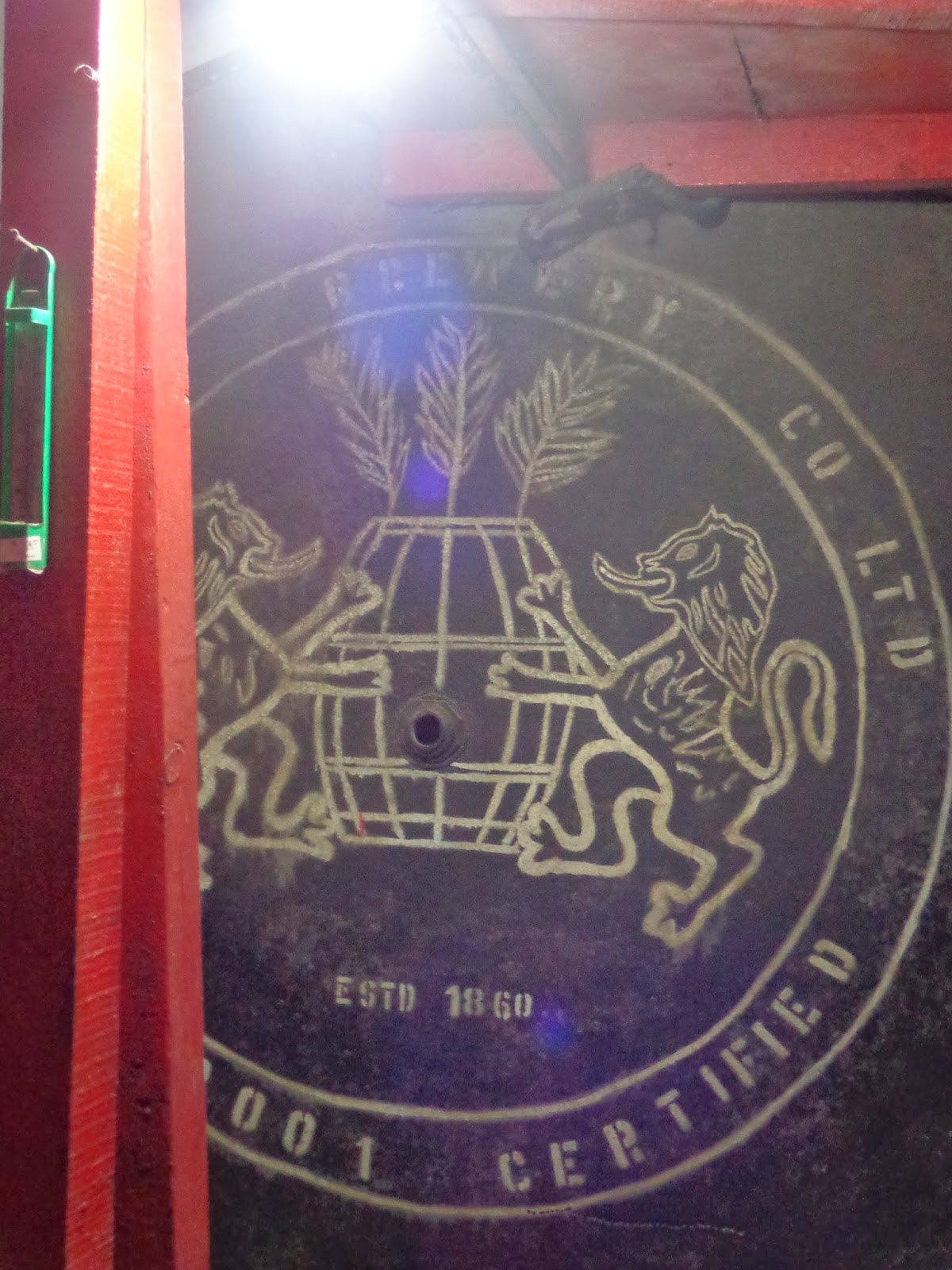
So it's pretty strange to consider that Murree Brewery, the only brewery in Pakistan, exists. On a recent weekend, we headed to its factory in Rawalpindi for a tour and tasting (left). The brewery used to be based in the mountain town of Murree, thus the name, because of the quality of water available there, but logistical costs drove it to move down to the valley into the Islamabad suburb. As its logo indicates (right), the brewery was established in 1860 during colonization by the British, who are known to enjoy a stout now and again.
So the brewery is more than 150 years old, and its facilities are not so young either. Taking a tour through the facility was like taking a step back in time. The drying ovens date to 1944, according to a placard (top left). The brew pots are manned by workers who stir the boil with wooden poles when necessary (top right). Normally, the factory is powered by electricity and gas, but load-shedding and petrol shortages mean workers sometimes, including the day we visited, have to run the plant with energy from a large wood-burning stove (bottom).
Even the barley is done up old school. The seeds arrive in plastic-woven -- finally, some signs of modernity -- bags (left), then they are spread along the length of entire floor of the factory to germinate slightly and naturally before the barley is incorporated into the mash (right).
In the bottling section of the brewery, there are more machines, but the big lights and many switches make them seem like they are straight out of a Cold War-era Mission Control (left). And quality control consists not of a computer, but a guy who pulls bottles off the line if they contain any impurities or don't contain enough liquid (right).
On this day, as you can see, the factory wasn't bottling beer but liquor. The brewery is known for its whisky (another British favorite, coincidentally), which is aged in a huge warehouse of casks (left). Apparently keeping the casks cool enough, especially during the country's hot and humid summer, is quite a task. But over the years, Murree has offered a selection of liquors, including a "lemon lime" gin and a vodka with a label remarkably similar to the old version of Smirnoff.
At first, I was a little shocked at all the cans stacked up outside (left), thinking they were full of beer that would become skunked, but they turned out to be empty. The full cans and bottles were loaded on Pakistan's famous jingle trucks (right), to be distributed to limited outlets throughout the country. Each province or terrority is in charge of granting permits for alcohol sales. In Islamabad, part of the Capital Territory, foreigners can purchase Murree products through a hotel. When we first arrived, Murree beer was available in the commissary, but when the outlet was forced to contract with a single distributor, it opted for one with international brands.
So it had been a long time since we had actually tasted Murree beer. The tasting started prior to the tour, perhaps to dull the shock of the outdated equipment. We were allowed to serve ourselves from a selection of the best beers in Pakistan: Special Strong Brew, Millennium Brew, Classic Lager, and Murree Beer (top). After the tour, we were treated to draft beer, served from a large beaker, perhaps the most scientific instrument in the place (bottom left). The brewery owners graciously provided us with snacks to sustain us, and much to my surprise, right as we were leaving, we were given a set of four mugs, replicas of the ones we had been using (and I had been coveting) during the tasting (bottom right).
 
Sadly, I did not manage to get a bottle opener, but I did sneak out a cardboard coaster with the slogan "Have a Curry with Your Murree!" 

Monday, February 17, 2014

This situation in Pakistan is unique (Serial No. 111-33)

Sometimes, it's possible to forget that my living situation right now is unusual. To be honest, in going through the day-to-day routine, the "abnormal" parts begin to fade away. Part of that is because I am surrounded by opportunities to do "normal" activities.

In some ways, being on the embassy compound and the extension of the diplomatic enclave feels like being on a college campus. There are all kinds of clubs to join: photography, bird watching, painting; at the request of a Pakistani employee, I even helped start a public-speaking club at the embassy.

If you're into team sports, there are weekly pick-up games of soccer (called football here, of course), rugby, and ultimate Frisbee. There are regular tournaments for such sports as tennis, petanque, and darts. I now own many shirts or medals from participating in organized sports events, including a 5K, a swimathon, a triathlon, and even a local version of the Marine Corps Historic Half (half-marathon).

If you prefer more individualized types of exercise, you can find spinning, pilates, and yoga classes on and off compound. To escape my gym-rat rut, I recently started going to a HIIT (High-Intensity Interval Training) class, offered twice a week -- for free -- at the embassy.

If your style is more lifting pints than weights, there is always a good excuse for a party. The international community means you get to celebrate all kinds of holidays: St. Patrick's Day, Chinese New Year, and Carnivale. The American holidays -- including Halloween, Memorial Day, and Valentine's Day (unfortunately) -- are not forgotten either. And hey, if it's not a holiday, just go to happy hour and sing some karaoke. We missed the biggest party of the year, the embassy's Marine Ball, because we were on R&R (not so unfortunately), but we competed in bar trivia a few times and ate haggis at the British High Commission's Burns Night.

More high-minded forms of entertainment are on hand. You can hear lectures on such things as climbing K2, the largest peak in Pakistan and the second-largest in the world; attend a poetry reading; or sing in the community choir. TJ and I chose to listen to a qawwali concert, and I joined a theater group, which is presenting Suites, a collection of plays by Neil Simon, right before I depart post. Hopefully, it will be a good finale for me, literally and figuratively.
TJ and I have seen only one other play, the same theater group's previous production, All You Need Is Luv. And it's hard to watch movies because most cinemas are off-limits. Still, we managed to watch one important movie, Zinda Bhaag, the first Pakistani film nominated to the Oscars in 50 years. Despite the movie's hopeful title -- which means "run to live" or "live destiny" in Urdu, depending on how you interpret it -- unfortunately it didn't make the short list voted on by the Academy of Motion Picture Arts and Sciences.
As soon as the winter weather arrived, we fled our air-conditioned confines and headed straight for the Margalla Hills to do more hiking (left). The scenery is always lovely, but Trail 5 was even more refreshing after the wet season, when the streams were even fuller (right).
Unfortunately, the precipitation had washed garbage throughout the hills, making Trail 3 a bit trashier, despite the reminders to "Keep the Environment Clean" (top left). In the parking lot, the monkeys ignored the signs and made a mess (top right). Luckiily, the primates stuck to the pavement, and we only saw bovines on the trail (bottom left). They kindly let our band of homo sapiens pass by, unperturbed and undisturbed (bottom right).
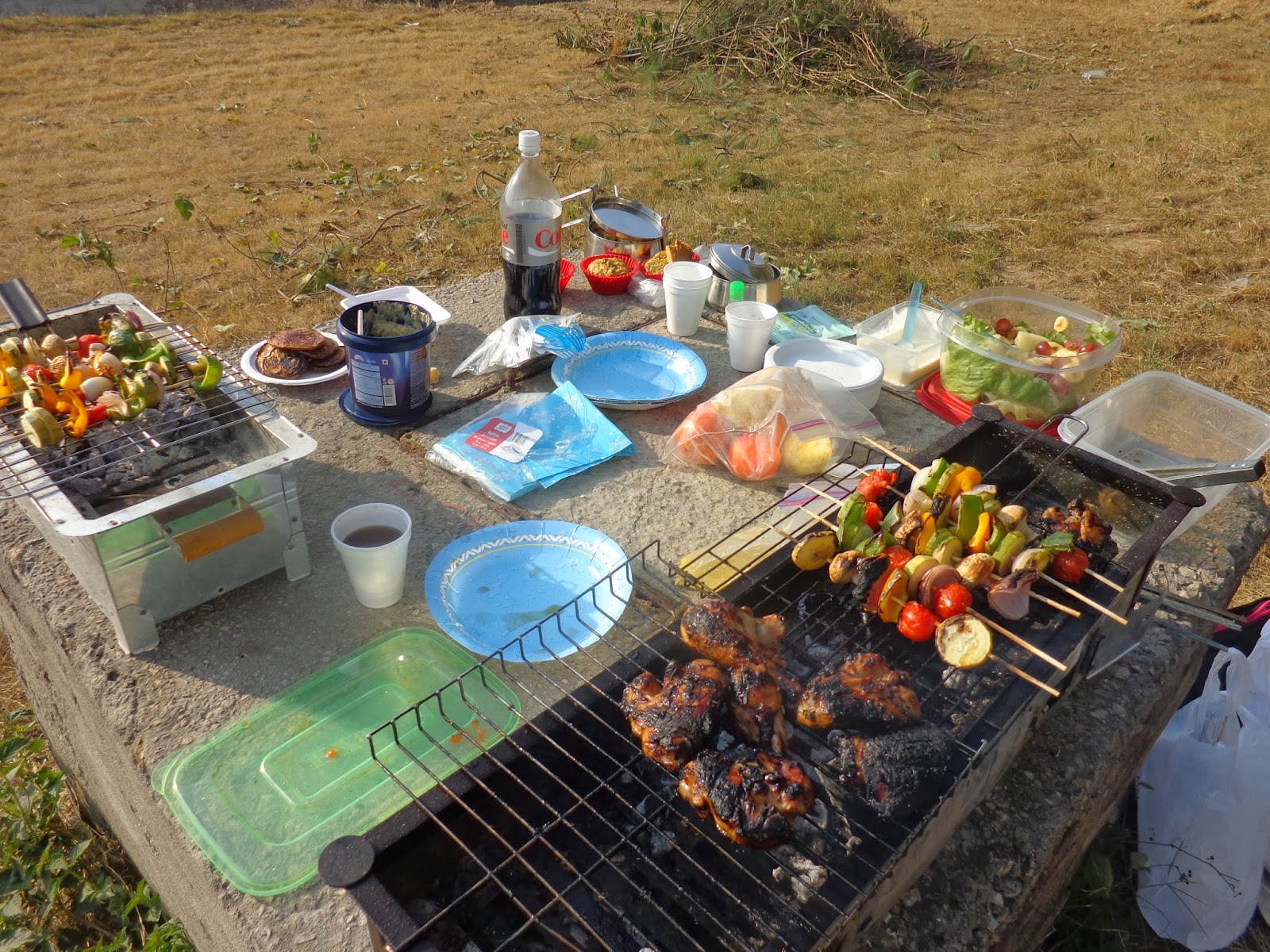
It's nice to get outside, but sometimes, you don't want to walk so far, so instead you pack up the barbeque for a picnic in the park (top left). We filled two grills with food at Fatima Jinnah Park, which takes up the entire F-9 sector of Islamabad and (dubiously) claims to be the largest city park in Asia (top right). This time, no monkeys or cows intruded upon us, but a stick insect tried to get in on the fun (bottom left). We happily let him hang out as we enjoyed some post-lunch games of soccer and bocce (bottom right).
Our picnic activities drew some stares, but for most of the time, we forgot that we didn't really "fit in." But in my opinion, "fitting in" is over-rated anyway. Overall, my time in Pakistan has been quite normal enough for me.

Saturday, January 18, 2014

Study of the archeological site and surrounding land (CRI 2011)

My time is running short in Pakistan, which means I am trying to squeeze in all the sights I can before I leave. Luckily, I have like-minded adventurers and CLO (Community Liaison Office)-led trips to assist me in my quest. On a recent weekend, I took back-to-back trips while TJ was stuck in Islamabad for a work duty.

Our first destination was Hasan Abdal, a small city off the Grand Trunk Road that boasts a temple to which hundreds of Sikhs make pilgrimage twice a year. On the day we visited, however, the only expeditions we saw were by a gaggle of geese crossing an overflowing drainage ditch (left) and a giggly boy chasing us up and down the main street (right). The temple is famous for a rock with the handprint of Guru Nanak, but unfortunately, as non-Sikhs, we were not allowed to visit the temple. And as non-Muslims, we didn't venture into the meditation cell of Sufi saint and Guru Nanak rival Baba Wali Qandhari either.
I guess you could say that, with some help from the Mughals, the Baba won -- at least in terms of scale. Evidence of the dynasty's influence throughout the region can be found in Hasan Abdal, once a pit stop on royal visits to Kashmir. Hakimon ka Maqbara is the final resting place of two brothers and doctors (left) of Emperor Akbar, the builder of the Red Fort in Agra, India. Down a path lies a walled garden that was once professed to be the tomb of Mughal Princess Lala Rukh (right), but that claim has never been verified. If the Mughals went the distance, perhaps the Sikhs passed the test of time; both tombs are full of grafitti and poorly maintained, whereas the temple appears to gleam, at least from the small peek we could catch of the interior.
But the Mughals brought beauty with them as well. During their stops in Hasan Abdal, they wanted to relax in nature, so Akbar or Jahangir or both facilitated the creation a miniature version of the grand Shalamar Gardens of Lahore. Like the tombs in Hasan Abdal, Wah Gardens have lost a lot of their luster, but some impressive bas-relief carvings (left) and marble mosaic tiles (right) remain.
But the remaining structures give a good indication of the gardens' former decadence. The clear focal point is a huge pool (left) in front of a pavilion that contained baths, fountains, and waterfalls. The spring-fed water from the main pool circulates throughout the park through channels, some of which have since been stopped up (right).  
The main channel on the opposite side of the gigantic pool leads to one of the gate watchtowers on the gardens' perimeter wall. We climbed to the top to get a better view of the property, but our focus was drawn to a nearby hillside when explosions at a quarry sent resounding booms across the land (left). After getting accustomed to the noise, we were able to enjoy the view, including of the lovely buildings and pastures outside the gardens (right).
The next day, I set out on a tour of Rohtas Fort, a UNESCO World Heritage Site, which is so large that it contains a village (left). The impressive fortress, whose perimeter is more than 4 kilometers (right), was built by Sher Shah Suri, founder of the Sur Empire, to protect the land he won in the defeat of yet another Mughal emporer, Humayan. Although both dynasties had roots in Islam, the Mughals more actively sought a universally Muslim society, whereas Hindus and Buddhists lived among the Sur. Ten years after Suri's death, the fort fell into the hands of the people it was meant to keep out: the Gakhars, a Hindu tribe that also eventually was converted to Islam by the Mughals. The Surs' bad luck continued from there; they evolved into Pashtuns, who were pushed into Afghanistan, then pushed back into Pakistan as refugees after the Soviet invasion.
 
The main entrance to the protected and preserved area of the fort is Baba Shah Chand Wali Gate (left), named after a Muslim saint who spent his whole life working on the gate yet refused to be paid. In fact, he died before its completion and is buried right outside it. Atop the gate is an area where court was held (right). From this vantage point, the judge and defendants could clearly see the execution platform across the plains. The execution of choice was hanging, and afterward, the condemned were simply cut down and dropped directly through a hole below. It seems to me that the worst punishment would be cleaning out the pit below the execution platform.
Another main gate of the complex is Langar Khani Gate, where elephants once brought in supplies and which leads up to Shishi Gate. On the day we visited, there were no elephants, but a young shepherd was searching for his goats (left). Between these two gates lies the king's palace, or Haveli Man Singh, named after a general of the aforementioned Akbar and built after Mughals won over the fortress. From the palace's crumbling top level, you can look over the kingdom and spy the more intact Rani Mahal, or queen's palace (right). 
At Shishi Gate, you can find some evidence of the fort's architectural details. In addition to the remaining blue stone (left), the gate once was covered with eponymous mirrors. At the Shahi Royal Mosque -- part of the Kabuli Gate, because it faces the now-Afghani city -- there are still delicately carved Muslim sayings and symbols (right).
 
The fort also features feats of engineering. After a short stop at the museum contained within Sohail Gate, we walked down into a well, which was built in case the fort came under siege and its citizens couldn't get to the nearby river (left). The well was waterless but full of chip wrappers, so I decided to look up and focus on how difficult it must've been to dig a hole so deep with manpower alone (right).